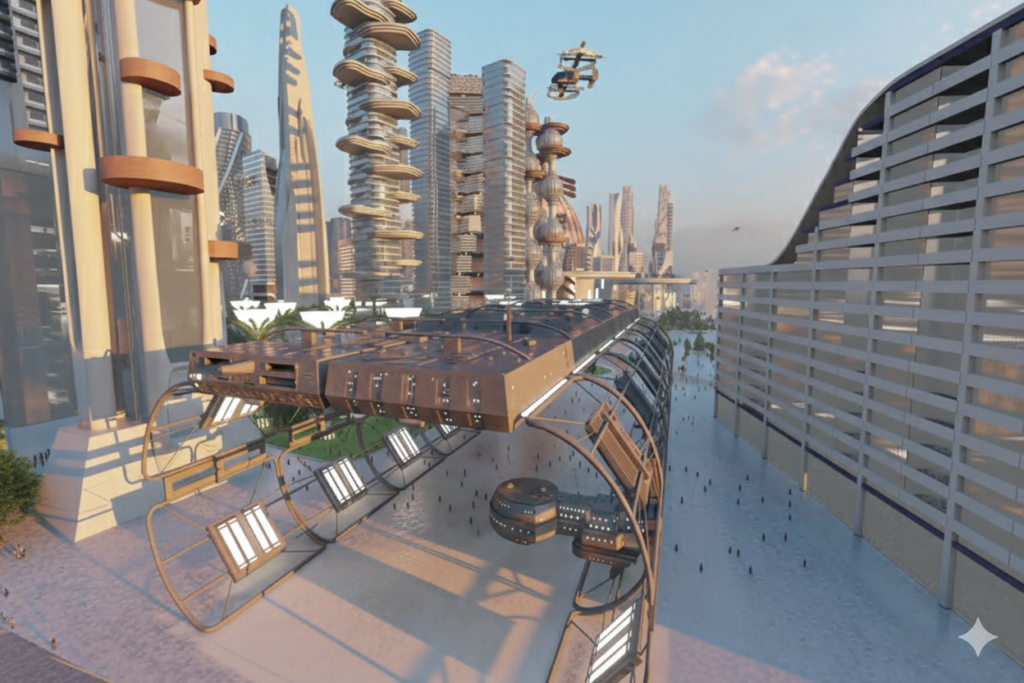
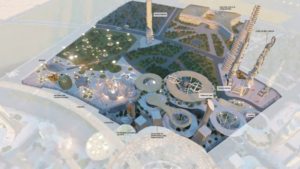
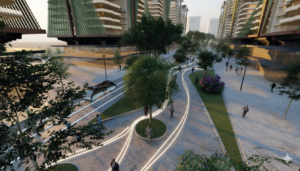
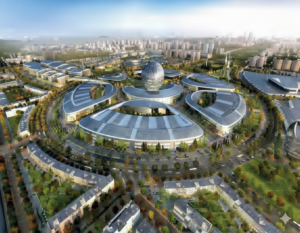
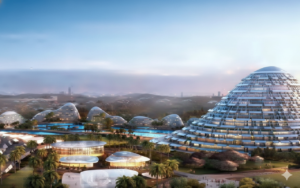
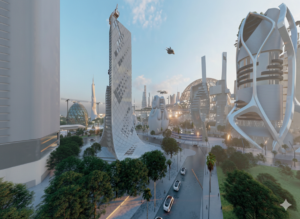
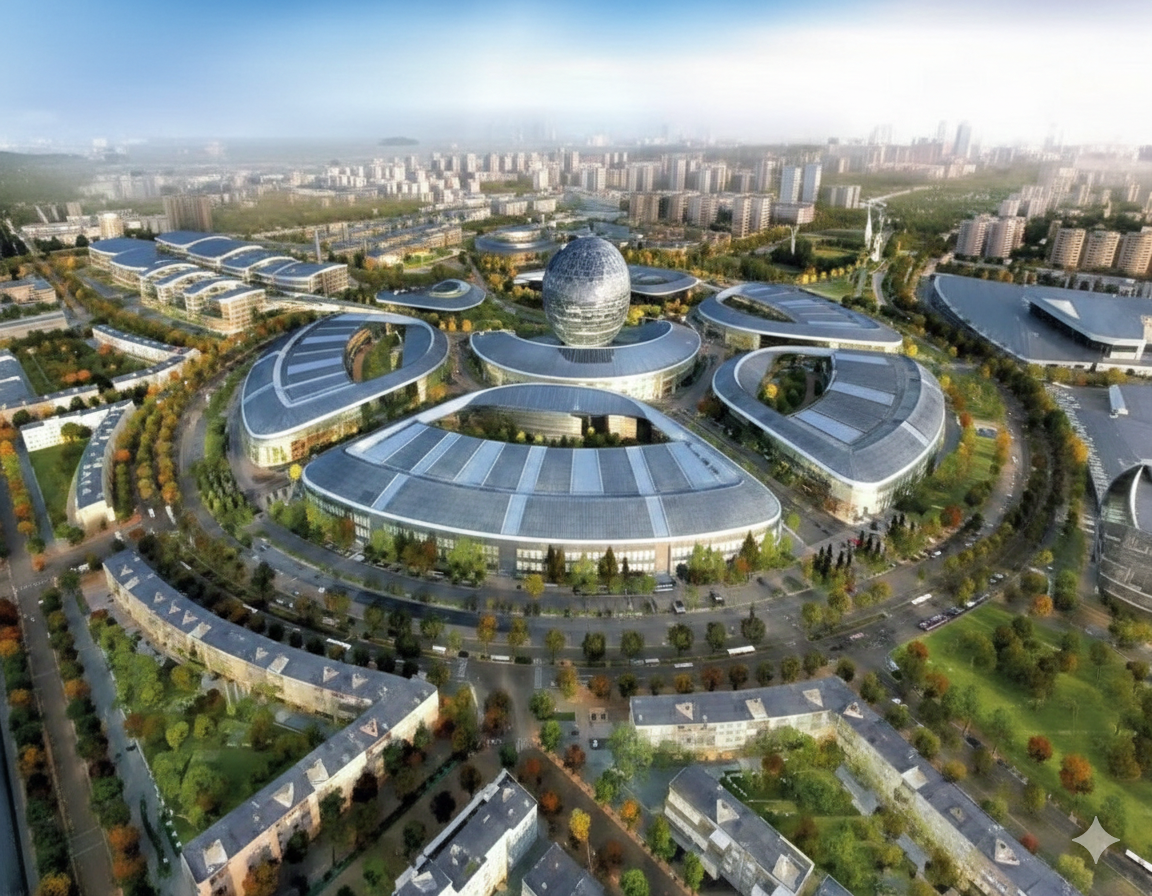
Universal Smart City is designed as a single, intelligent urban ecosystem, structured into specialized city zones and supported by advanced technology frameworks. Each component serves a clear purpose while remaining fully interconnected—ensuring efficiency, sustainability, and long-term resilience.
Three Smart City Types
Capital City
The administrative and governance center of the smart city.
The Capital City integrates smart governance, digital public services, financial systems, and intelligent mobility to ensure efficient decision-making and transparency. It acts as the operational brain of the city, connecting institutions, citizens, and infrastructure through digital systems.
Key Focus Areas:
Smart governance and digital administration
Financial and institutional hubs
Intelligent transportation and mobility
Secure data-driven public services
Industrial City
The engine of innovation and economic growth.
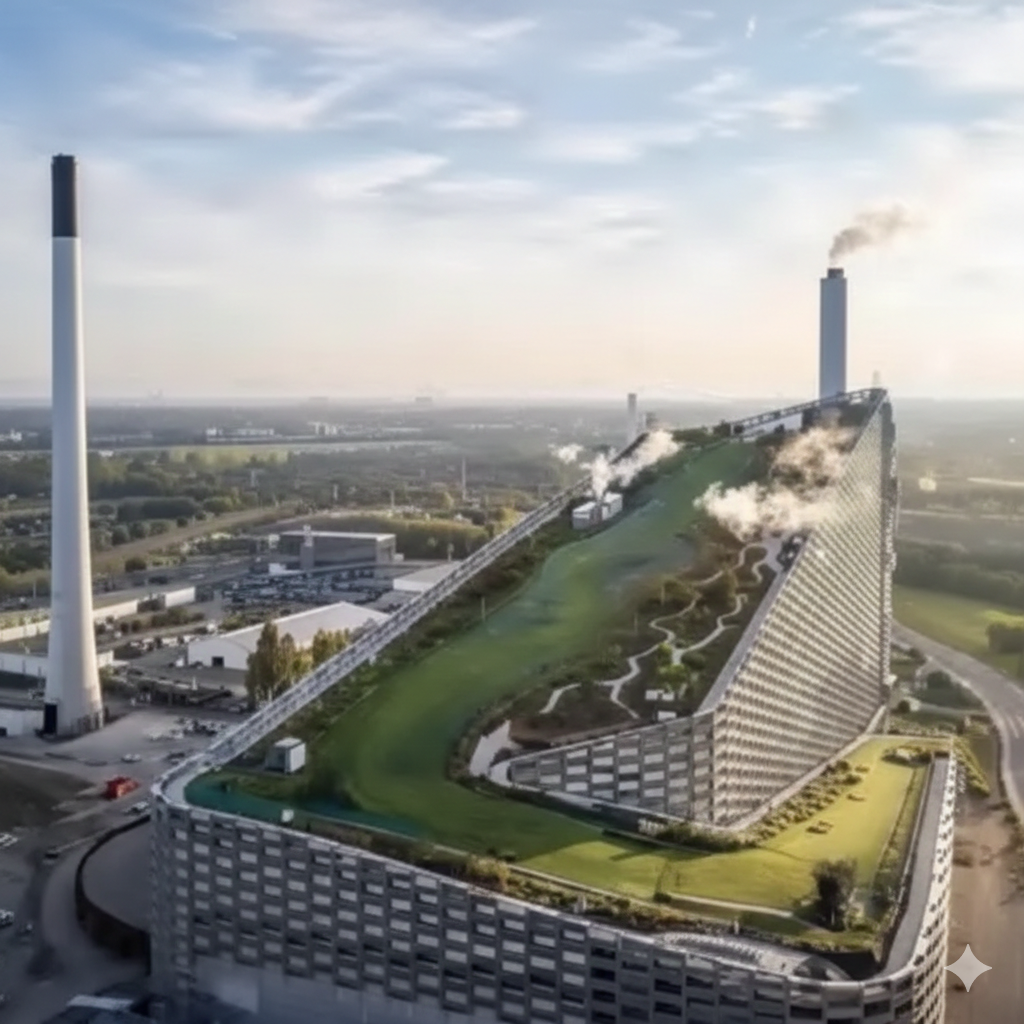
The Industrial City is designed to support smart manufacturing, research, logistics, and sustainable production. Powered by clean energy and automation, it enables high productivity while minimizing environmental impact.
Key Focus Areas:
Smart manufacturing and automation
Research and innovation centers
Sustainable logistics and supply chains
Waste-to-resource systems
Agricultural City
The foundation of food security and sustainability.
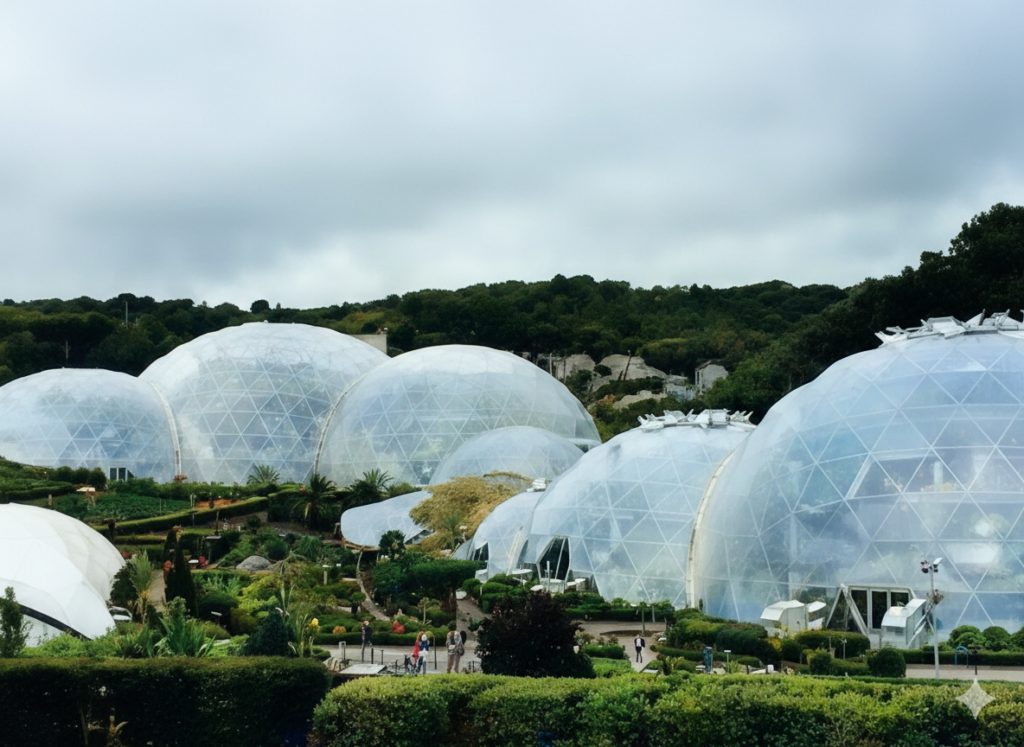
The Agricultural City focuses on smart farming, resource efficiency, and ecological balance. It combines modern agricultural technology with renewable energy and water management systems to ensure long-term self-sufficiency.
Key Focus Areas:
Smart and precision farming
Vertical and urban agriculture
Water recycling and resource optimization
Food security and resilience
Five Smart City Technology Frameworks
Technology Framework
Provides the digital backbone of the city, enabling connectivity, automation, and intelligent operations across all sectors.
Human Framework
Focuses on people—education, healthcare, community well-being, and inclusivity—ensuring technology serves human needs.
Institutional Framework
Supports transparent governance, policy alignment, and efficient administration through digital systems and smart regulations.
Energy Framework
Integrates renewable energy, smart grids, and zero-emission systems to power the city sustainably and reliably.
Data Management Framework
Ensures secure data collection, analytics, and insights to drive informed decision-making and continuous improvement.
One Unified Smart City Model
Together, the three city types and five technology frameworks form a cohesive, scalable smart city solution—designed to adapt, expand, and deliver long-term environmental, social, and economic impact.
Merchant Payment Application
A Secure Digital Layer for Smart City Funding
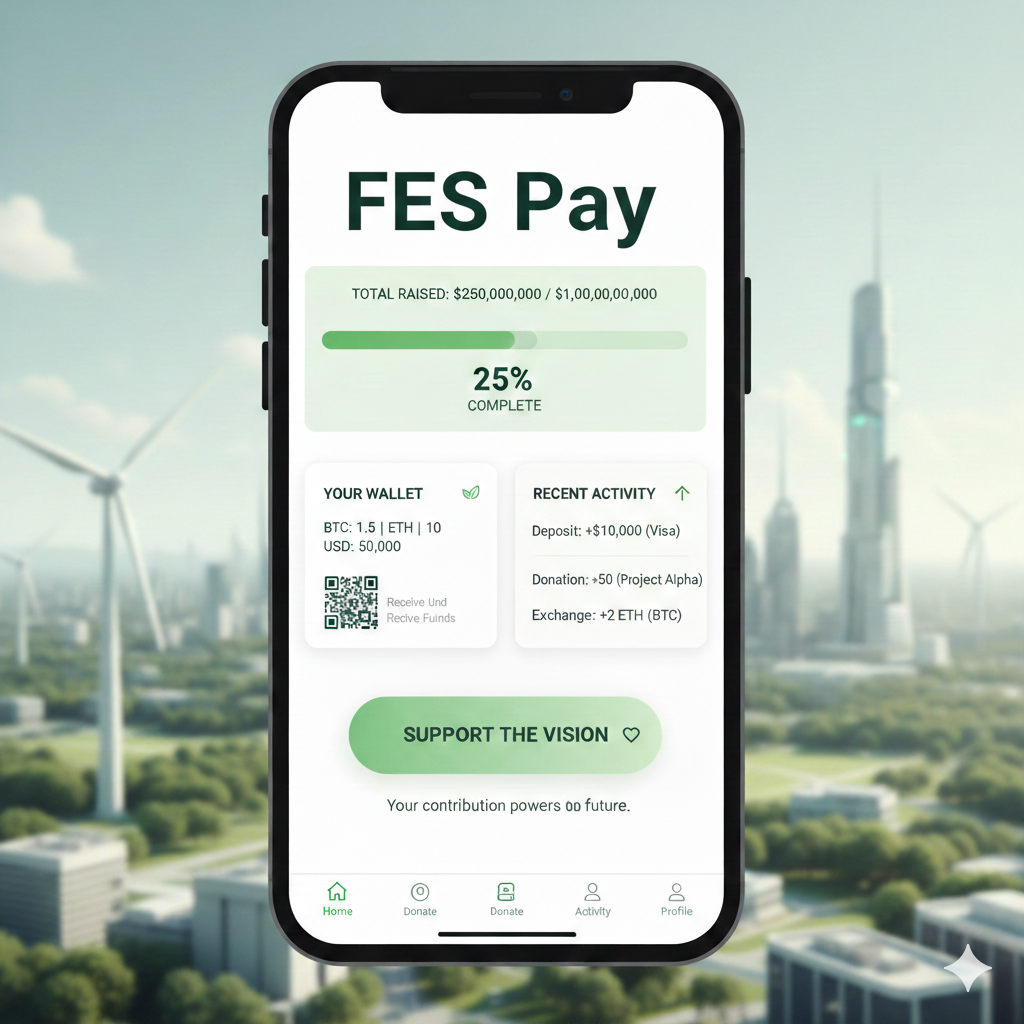
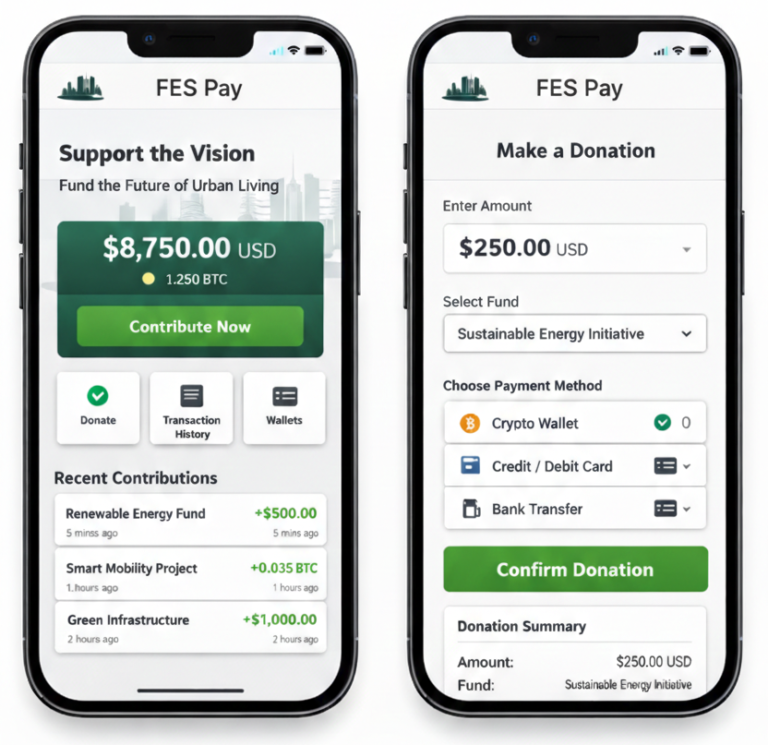
As part of the Universal Smart City ecosystem, we are developing a dedicated merchant payment application designed to support transparent fundraising, digital transactions, and future economic activity within the city.
This application enables direct, in-platform payments, ensuring contributors, partners, and institutions can support the project through a secure and controlled system—without reliance on external intermediaries.
What It Enables
Seamless collection of donations and contributions
Direct, in-app payment flows with full system control
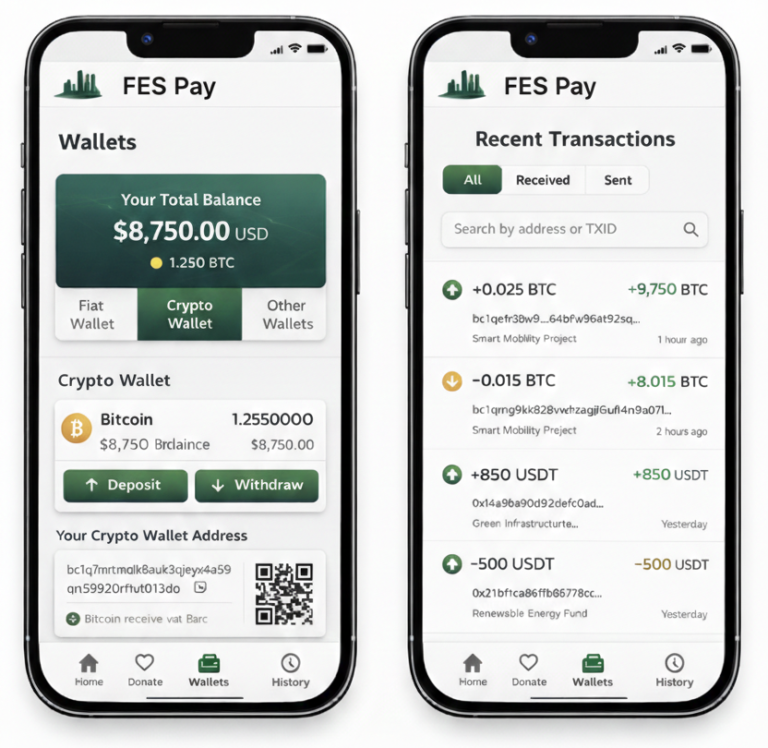
Secure handling of digital payments and wallets
Transparent tracking of funds and transactions
Scalable infrastructure aligned with future city expansion
Why It Matters in a Smart City
Digital payments are a foundational layer of any smart city. By owning and operating this payment infrastructure, Universal Smart City ensures trust, transparency, and long-term independence, while creating a financial system that can grow alongside the city itself.
This application reflects the same principles as our urban model: ownership, resilience, and future readiness.