Designing Cities for the Future
Our Vision
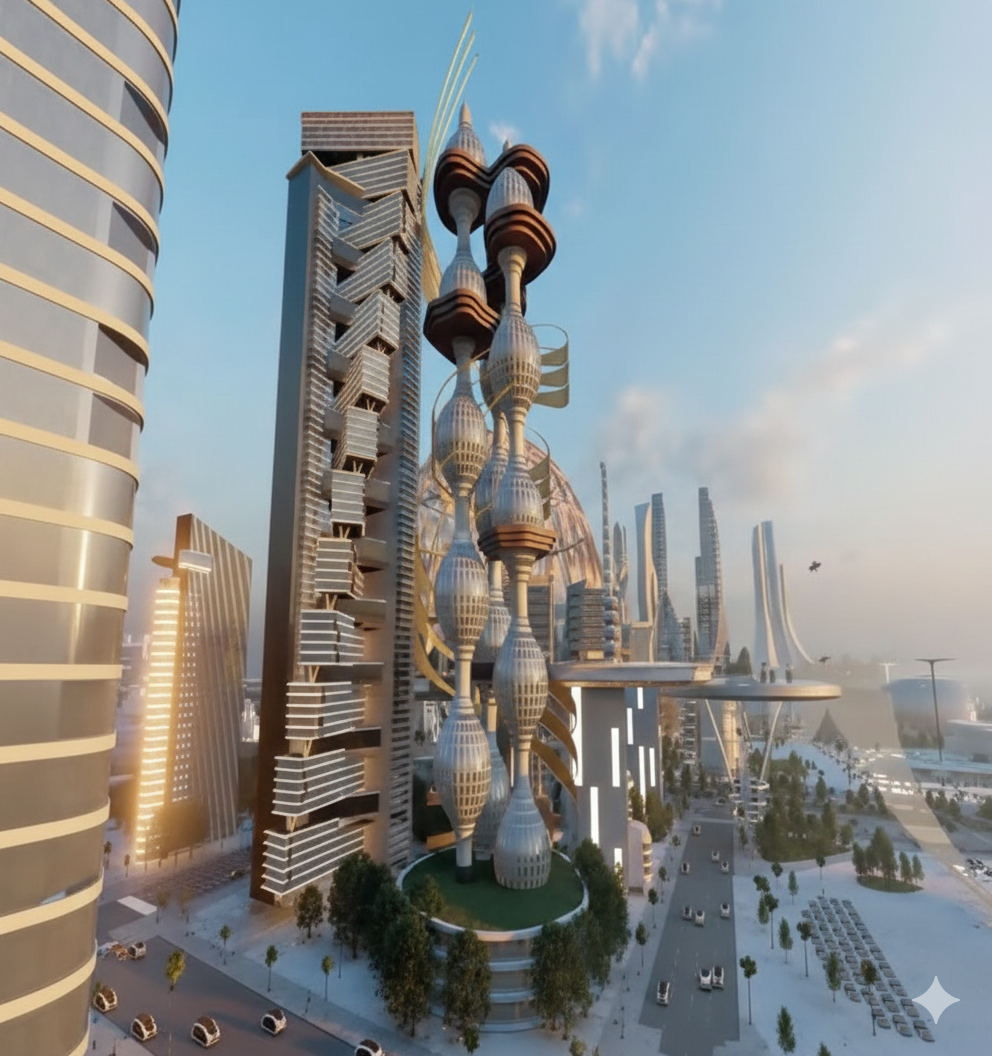
We envision a smart city that is sustainable, human-centered, and future-ready—a city where technology, infrastructure, and nature work together to improve quality of life while minimizing environmental and economic costs.
A smart city, in our view, is not defined by gadgets or automation alone. It is a living urban ecosystem designed to respond intelligently to the needs of its people, adapt to change, and remain resilient over time. Every system—energy, transportation, governance, industry, agriculture, and community life—is planned as part of one connected whole.
Our vision is to create a city that is:
Environmentally responsible and low-emission
Digitally connected and intelligently managed
Economically sustainable and self-sufficient
Designed at a human scale, not just a technological one
Scalable and adaptable for future generations
Our Approach
We follow a structured, research-driven approach to smart city development, ensuring that vision translates into real, executable outcomes.
1. Integrated City Planning
The city is designed as a unified system rather than isolated developments. Capital, industrial, and agricultural zones are interconnected digitally, economically, and socially—ensuring balance, efficiency, and long-term resilience.
2. Human-Centered Design
Urban spaces are planned around people, not vehicles or infrastructure alone. Walkability, accessibility, green spaces, and community interaction are core priorities, ensuring livability alongside innovation.
3. Smart Infrastructure & Technology
Digital systems, data management, and intelligent automation are embedded across transportation, utilities, governance, and public services to improve efficiency, transparency, and responsiveness.
4. Sustainability at the Core
Renewable energy, smart grids, water recycling, and resource optimization are integrated from the start—reducing emissions, lowering long-term costs, and supporting environmental balance.
5. Scalable & Phased Development
The city is designed to grow in phases, allowing controlled expansion, risk reduction, and continuous improvement. This makes the model adaptable and replicable across regions.
6. Transparency & Governance
Smart governance frameworks and digital oversight ensure accountability, efficient decision-making, and trust—critical for long-term success and public confidence.
What This Creates
By combining vision with disciplined execution, Universal Smart City becomes more than a concept—it becomes a practical, investable, and future-proof urban model capable of addressing real global challenges.
This is how we transform the idea of a smart city into a sustainable reality.